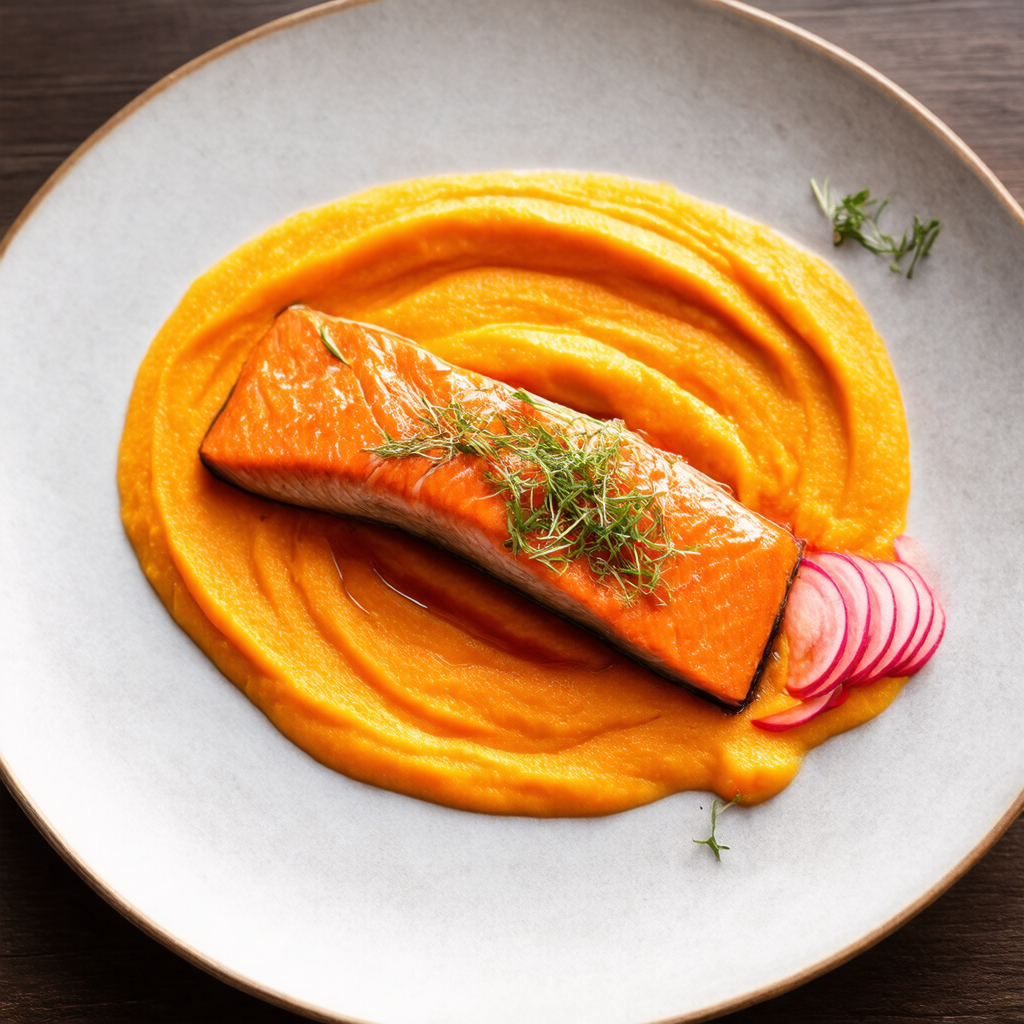
Miso Gochujang-Glazed Salmon with Sweet Potato Puree
This dish presents a harmonious blend of flavours and textures, combining the spicy kick of gochujang and the rich umami notes of miso with succulent salmon, all beautifully balanced by a silky sweet potato puree. The pickled radish provides a refreshing crunch and tang, while microgreens add a touch of freshness, creating an impressive dish perfect for dinner.
- Total
- 25 min
- Serves
- 4
- Level
- Adventurous
Created with Pantry Bliss
Ingredients
4 servings
For the Salmon
- 4 pieces salmon fillets, skin on, about 150g each
- 30 grams miso paste
- 15 grams gochujang
- 15 grams honey
- 10 milliliters rice vinegar
- 10 milliliters sesame oil
- a pinch salt
For the Sweet Potato Puree
- 600 grams sweet potatoes, peeled and cubed
- 30 grams butter, unsalted, at room temperature
- 50 milliliters heavy cream, at room temperature
- to taste salt
For the Pickled Radish
- 200 grams radishes, thinly sliced
- 60 milliliters rice vinegar
- 60 milliliters water
- 10 grams sugar
- 2 grams salt
For Garnish
- 30 grams microgreens
- Prep
- 10 min
- Cook
- 15 min
About this recipe
Inspired by the growing trend of blending Eastern and Western flavours, this dish highlights the perfect balance between the heat of gochujang and the subtle sweetness of sweet potatoes. The incorporation of miso reflects the depth of Japanese culinary influence, while presenting a comforting classic dish with a twist. The approach taken in this recipe allows the creation of exquisitely deep flavours whilst ensuring a visually stunning plate worthy of a Michelin-star dinner.
Method
-
Step 1: Prepare Pickled Radish
In a small saucepan, combine rice vinegar, water, sugar, and salt. Bring to a simmer over medium heat until dissolved. Pour this mixture over the thinly sliced radishes in a bowl. Let sit for at least 10 minutes to pickle before serving.
Ensure the sugar and salt are fully dissolved before pouring over radishes. -
Step 2: Make Sweet Potato Puree
Place the cubed sweet potatoes in a saucepan with salted water. Bring to a boil and cook until tender, about 15 minutes. Drain the sweet potatoes and return them to the pot. Add butter, heavy cream, and salt, then blend using a blender or food processor until smooth and creamy. Keep warm until ready to serve.
Ensure sweet potatoes are fork-tender before draining. -
Step 3: Prepare Salmon Glaze
In a small bowl, whisk together miso paste, gochujang, honey, rice vinegar, sesame oil, and a pinch of salt until well combined.
Ensure all ingredients are well mixed to create a smooth glaze. -
Step 4: Cook Salmon
Preheat your oven to 200°C (400°F). Line a baking tray with parchment paper. Place the salmon fillets skin-side down on the tray. Brush a generous amount of the miso gochujang glaze over the tops of the fillets. Bake for 12-15 minutes until the salmon is glazed and opaque throughout, reaching an internal temperature of 63°C (145°F).
Be careful not to overcook the salmon; it should flake easily with a fork. -
Step 5: Plate the Dish
On each plate, create a base with the sweet potato puree. Top with the glazed salmon fillet and garnish with pickled radish slices and a handful of microgreens.
Presentation should be clean, with the puree forming a base to allow the salmon to sit well.
Tips
- For additional flavour, consider adding a squeeze of lime juice to the sweet potato puree.
- If preferred, substitute the salmon with skin-on chicken thighs for a different protein variation.
- Make the sweet potato puree ahead of time and reheat gently before serving to save time.
Equipment
- Baking tray
- Saucepan
- Blender or food processor
- Small bowl
- Whisk
- Spoon
- Knife
- Cutting board
Serve it with
Sides
-
Steamed Basmati Rice
The lightness of the rice provides a perfect base to soak up the sweet potato puree and glaze.
-
Sautéed Asparagus
The crunch of asparagus adds texture to the meal and complements the other flavours.
Goes well with
-
Sesame Noodle Salad
The freshness in the salad acts as a refreshing contrast to the rich salmon.
-
Mango Mousse
The sweetness of the mousse provides a delightful finish to the spicy main dish.
Drinks
-
Chilled White Wine
A crisp Sauvignon Blanc sips nicely with the richness of the salmon and balances the heat from the gochujang.
-
Iced Green Tea
Its refreshing taste complements the meal without overshadowing the dish.
Created by a home cook with Pantry Bliss’s AI recipe creator and shared with the community. Always check recipes for allergens and cook food to safe temperatures.