What to Do With Leftover Mashed Potatoes
Cold leftover mash makes crisp breakfast cakes, a turkey cottage pie topping, or a quick thick soup. Refrigerate it promptly and use it while it’s still at its best.
Cold leftover mashed potatoes are easiest to shape into cakes. Looser mash is better stirred into soup or spread over a cottage pie topping. Refrigerate it promptly, then use it within 3–4 days or freeze portions for later.
Start with breakfast potato cakes
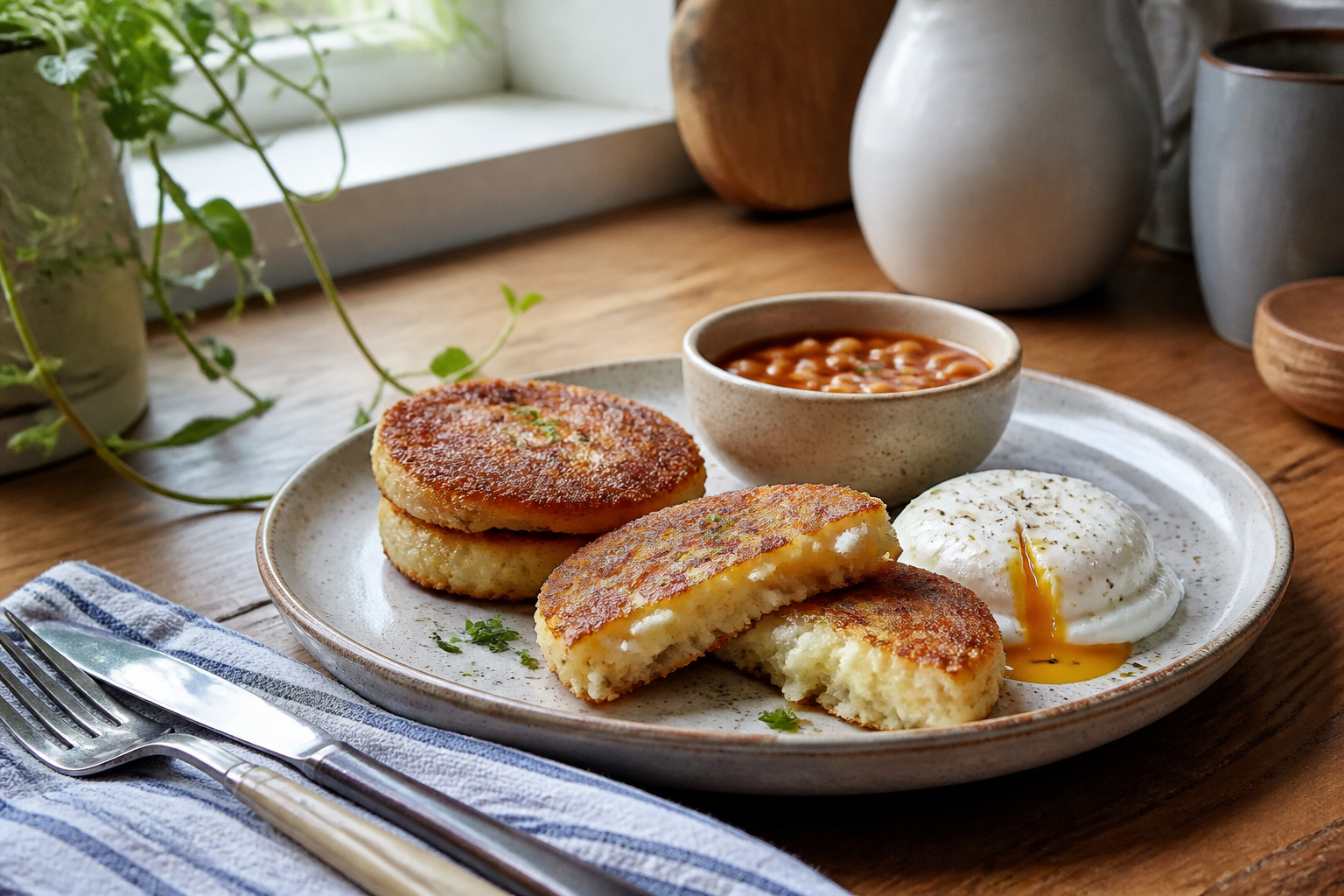
My family loves leftover mashed potatoes for breakfast. I mix them with goat cheese and fry the cakes until crisp on the outside, then serve them with a poached egg and baked beans. Cold mash should be firm enough to hold a mound on a spoon. If yours is soft and buttery, a little flour helps the cakes stay together in the pan.
For about 6 small cakes, mix 2 cups (480 mL) cold mashed potatoes with 2 ounces (55 g) crumbled goat cheese, 1 large egg, and 2 tablespoons (16 g) all-purpose flour. If the mash is loose, add flour 1 tablespoon (8 g) at a time until a scoop holds its shape.
Shape the mixture into 6 patties about ½ inch (1.3 cm) thick. Heat a thin layer of oil in a skillet over medium heat. Fry for 3–4 minutes per side, turning once, until the crust is deep golden and the middle is hot. Keep the sizzle steady so the center heats through before the crust gets too dark.
For a larger bowl of mash, use this ratio: mix 3 cups (710 mL) cold mashed potatoes with ⅔ cup (75 g) shredded Cheddar, 1 large egg, and 3 tablespoons (24 g) flour. If the mixture is too wet to hold together, add more flour a tablespoon at a time, as in Food Network’s potato pancake recipe.
Top a turkey cottage pie
For 3 cups (710 mL) of mash, use about 1½ pounds (680 g) cooked turkey, chopped, and 3 cups (about 450 g) mixed cooked vegetables. Peas, carrots, green beans, or leftover roasted vegetables all work. Stir them with 1½ cups (360 mL) gravy or broth in a baking dish, then spread the mashed potatoes over the top.
Leave a few ridges with a fork; they brown better than a smooth surface. Bake at 400°F (200°C) until the filling bubbles at the edges and the center reaches 165°F (74°C). If the potatoes are stiff, loosen them with a splash of milk before spreading. Soft mash will slump into the filling, so spread it as it is.
A handful of turkey, half a cup of gravy, and the last scoop of green beans can all go into the filling. For other combinations, this guide to cooking with what’s in your fridge shows how to turn mixed leftovers into dinner. Chop the turkey into bite-size pieces so it warms through evenly with the vegetables.
Stir a few cups into soup
Mashed potatoes thicken soup quickly, so add broth gradually. For a pot serving about four, whisk 4 cups (950 mL) mashed potatoes into 3 cups (710 mL) broth over medium heat. Simmer gently for 10 minutes, stirring often so the potato doesn’t catch on the bottom. Add more broth if the soup is thicker than you like.
Stir in a handful of sliced scallions at the end. Their raw, grassy heat cuts through the buttery potatoes. For its corn soup, Food Network simmers 4 cups of mashed potatoes with 3 cups of broth, then adds the corn in its leftover potato soup recipe. Taste before salting; holiday mash may already contain plenty of salt, butter, or cheese. Heat the finished soup to 165°F (74°C), checking the center with a thermometer.
Add a scoop to grilled cheese
For one sandwich, spread about ⅓ cup (80 mL) mashed potatoes between the bread and cheese. Keep the layer thin so the middle warms before the bread gets too dark. Sharp Cheddar or Swiss works well. Cook over medium-low heat, turning once, until the bread is browned and the filling reaches 165°F (74°C). RICARDO’s leftover potato ideas also suggest layering a small amount of warmed mash into grilled cheese.
Firm mash works best here. If yours is loose, put the potatoes in a small pan and stir over low heat for a minute or two to let some moisture escape. Cool them before assembling. Wet filling can make the bread soggy before the cheese melts.
Freeze useful portions
If you are wanting to have mash potatoes as a side, I wouldn’t recommend freezing - spending the 20-30 minutes to make fresh is always best. However, if you are going to make it into breakfast cakes or use it as a thickener, then freezing can help minimise food waste. Spoon cooled mash into individual 1-cup (240 mL) portions, press out excess air if using freezer bags, and label each portion with the date. Freeze the bags flat; they stack neatly and thaw faster than a deep container. Mash with plenty of butter or cream tends to freeze better than leaner mash, though the texture may still turn a little grainy or separate after thawing.
USDA FSIS says frozen leftovers keep their best quality for 3–4 months. For the smoothest texture, The Kitchn recommends using frozen mashed potatoes within a month in its freezing and reheating guide, updated October 18, 2023.
Thaw a portion overnight in the refrigerator, or reheat it from frozen in a covered saucepan over low heat. Stir often and add a splash of milk or broth as it loosens. Heat until the center reaches 165°F (74°C), then beat briefly with a spoon or whisk to smooth it out. Thawed potatoes can feel a little grainy, so stir them into soup; the broth loosens the mash.
Cool and store mashed potatoes safely
Get leftover mashed potatoes into the refrigerator within 2 hours of serving, or within 1 hour if the room or outdoor temperature is above 90°F (32°C). Divide a large bowl among shallow containers so it cools faster, and refrigerate at 40°F (4°C) or below. USDA FSIS recommends using refrigerated leftovers within 3–4 days; freeze what you won’t use in that time (USDA FSIS).
For reheating, add a splash of milk or broth and warm the potatoes covered in the microwave, or stir them in a saucepan over low heat. In the oven, use a covered dish to keep the surface from drying out. Stir or turn them partway through, and check that the center reaches 165°F (74°C) with a food thermometer. Keep a note of the date on the container; tracking food expiry dates at home is especially handy when holiday leftovers crowd the fridge.
FAQ
Can mashed potatoes sit out overnight if I reheat them well?
No. Discard them. Reheating does not make food safe after it has spent too long at room temperature; the two-hour limit still applies.
Can I freeze mashed potatoes with gravy mixed in?
You can freeze the mixture, but gravy may loosen as it thaws. Freeze it in meal-sized portions and plan to use it in a cottage pie or soup, where a softer texture works well.
What if thawed mashed potatoes look separated?
Warm them gently and stir in a tablespoon (15 mL) of milk or broth at a time. A whisk can bring the mixture back together. If it stays a little grainy, use it in soup or under a pie topping.
Can I use mashed potatoes that have a dry crust on top?
A dry surface from storage can be stirred back in if the potatoes were refrigerated promptly and are still within the safe storage window. Discard them if they smell sour, feel slimy, or have been stored too long.
Sources
- #leftovers
- #potatoes
- #thanksgiving
- #food safety