Kitchen starter kit: 10 tools worth buying
A kitchen starter kit for everyday cooking: 10 tools worth buying, and what to look for in each one.
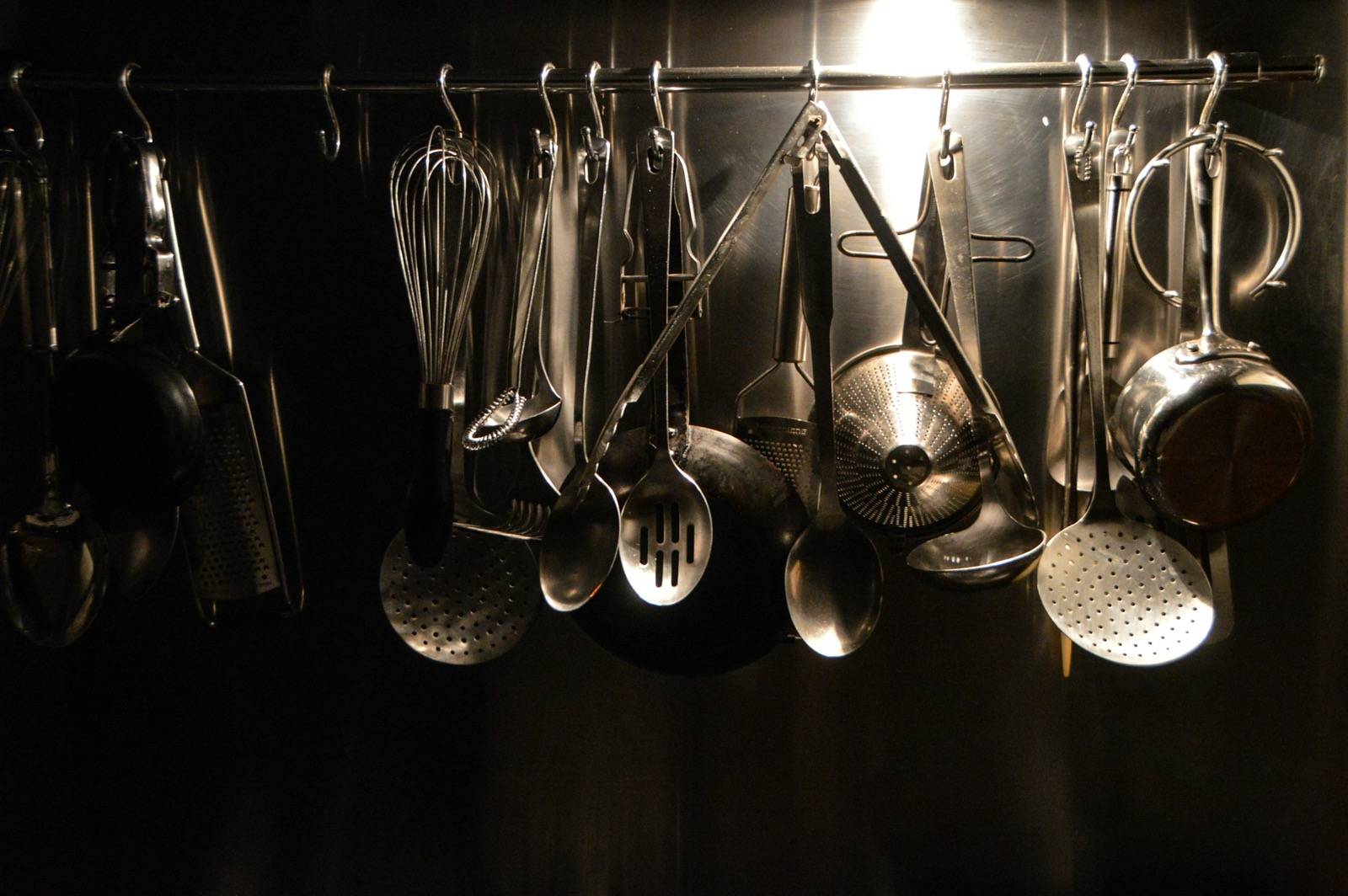
A garlic press, an apple corer and a banana slicer each do one job. Give that drawer space to a knife that can chop carrots and carve a chicken, or a pan that can fry eggs and sear a steak.
1. The chef’s knife (8 inches [20 cm])
Start here. An 8-inch (20 cm) chef’s knife has enough blade to slice onions and chop carrots, but it’s still manageable for mincing herbs or carving a roast chicken.
Look for high-carbon stainless steel, a full tang (metal running the length of the handle) and a grip that feels comfortable. Balance matters more than a fancy handle. Compare shapes at WÜSTHOF and Victorinox; Kitchen Warehouse carries a range of chef’s knives.
2. A large cutting board
Give yourself enough space to cut an onion without chasing it across the counter. Wood and bamboo are gentle on a knife’s edge and have natural antimicrobial properties. A groove around the board catches juices; keep a separate, nonporous plastic board for raw meat.
Set the board on a damp cloth so it stays put.
3. The heavy-bottomed skillet (10–12 inches [25–30 cm])
Use this pan to sear steak, sauté vegetables or fry eggs. In a thin pan, the onions over the burner can scorch while those at the edges are still pale. A heavy base makes that less likely.
Stainless steel lets you brown a steak and scrape up the browned bits for a pan sauce. Cast iron lasts well and develops a natural nonstick surface with use, though it’s heavier. To start a dish on the stove and finish it in the oven, check that the handle is oven-safe.
4. A large pot (stockpot or Dutch oven)
A big batch of soup needs room to simmer. So do stew, pasta and braised meat; a heavy pot holds heat well during slow cooking.
An enameled cast-iron Dutch oven can move from stove to oven. Le Creuset makes them, and Victoria’s Basement has more affordable options. If you’ll mostly boil pasta, I’d buy a stockpot.
5. A medium saucepan (about 2–3 quarts [2–3 L])
Reach for this when the large pot feels excessive: rice, quinoa, a sauce, a few eggs or a portion of leftovers. Choose a heavy bottom for steadier heat and a tight-fitting lid, particularly if you cook rice.
6. Measuring cups and spoons
Keep a set for recipes measured by volume, especially baking recipes, where small changes can affect the outcome. Stainless steel won’t warp, stain or absorb odors the way plastic can. Check that the markings are easy to read and won’t rub off.
7. A nesting set of mixing bowls
One bowl holds cake batter; another catches chopped vegetables while you clear the board. Nesting sizes take up less cabinet space, and a large bowl can double as a salad bowl. Stainless steel won’t react with lemon juice, so use it for a sharp dressing, too.
8. Heat-resistant silicone spatula and tongs
A silicone spatula gets sauce from the corners of a pan, folds batter and won’t scrape a nonstick surface. Buy a one-piece spatula so food can’t lodge where the head meets the handle.
Tongs let you turn meat in a hot skillet or lift food from a grill. A locking pair takes up less room in the drawer.
9. A fine-mesh sieve
A medium sieve, around 6–8 inches (15–20 cm) across, will rinse grains, sift flour, dust a cake with powdered sugar and strain a sauce. It can drain a small portion of pasta, too; use a colander for a full pot.
10. A digital scale
For baking by weight, I’d buy the scale before upgrading the measuring cups. It measures flour more accurately than scooping it, and you can weigh several things into one bowl instead of washing a cup after each one.
Set the mixing bowl on the scale and press tare to zero the display before adding flour. Press it again before you add the next ingredient.
For a meal using what’s in the fridge, Pantry Bliss can suggest a one-pan dinner or tomato soup from what you have.
- #pantry bliss
- #tools
- #essentials
- #kitchen
- #starter kit